


AI Physics and Domestic Robotics: What to Expect from the New Personal Assistants
For years, Artificial Intelligence was something we only saw in chat windows or video recommendations. But in 2026, the great revolution is happening in the real world. Physical AI is the term that defines the union between advanced language models and robotic bodies, creating assistants that not only speak, but act on the environment. Se você achava que robôs domésticos seriam apenas aspiradores de pó circulares, prepare-se para uma mudança de paradigma.
4/18/20262 min read
The Physical AI Revolution: When Code Gains a Body
The greatest hurdle in robotics has always been "common sense." Traditionally, a robot had to be programmed for every specific movement. With the advent of Physical AI, robots now utilize Vision-Language Models (VLM). This means they can look at a cluttered table and distinguish between a "dirty cup" and an "important document."
This perceptual capability allows robots to learn through observation. In 2026, we are already seeing advanced prototypes that learn to fold clothes or organize shelves simply by watching a video of a human doing it. Software is no longer just processing data; it is understanding the physics of the world—gravity, friction, and material resistance.
Service Robots: Can They Organize Your Domestic Routine Yet?
While we aren’t quite at "The Jetsons" level yet, the physical assistants of 2026 are already performing tasks that were previously impossible:
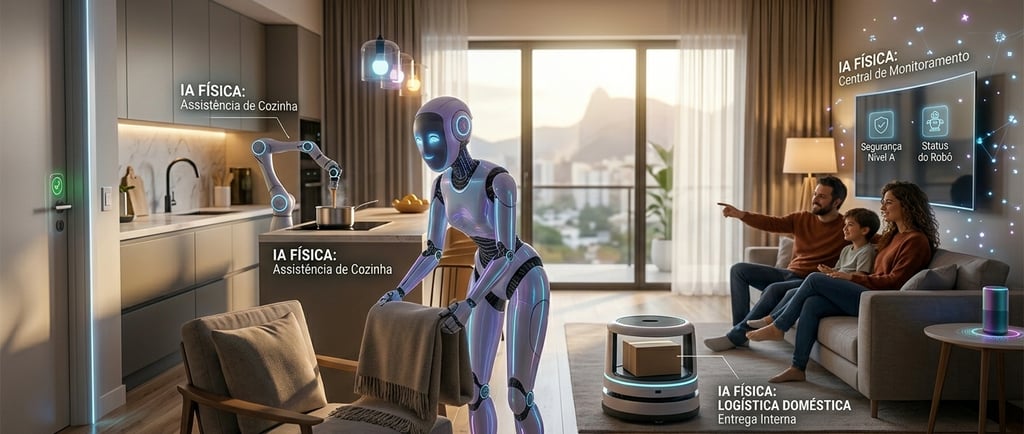
Internal Logistics Butlers: Small autonomous robots that transport objects between rooms, deliver packages to your doorstep, and even monitor pantry inventory.
Collaborative Kitchen Assistants: Precision robotic arms that help with food prep—chopping vegetables or stirring pots—operating with safety sensors that halt movement at the slightest human touch.
Intelligent Monitoring Drones: Unlike fixed cameras, these drones patrol the residence. Using AI, they can identify anomalies—such as a leaking faucet, a pet in a restricted area, or an open window.
At Melhor Indicação Tech, we closely monitor how these devices are becoming accessible to the end consumer, moving beyond the walls of research laboratories.
Security and Ethics: The Challenges of Physical Intelligence at Home
As mobile robots enter our homes, new questions arise. Security is no longer just digital (hackers), but physical as well.
Visual Privacy: Since these robots "see" the world, local visual processing is crucial. The most secure models of 2026 ensure that images of your home never leave the robot’s hardware.
Safe Coexistence: AI must guarantee that, in the event of a system error, the robot causes no physical or material damage. This has led to the trend of "Soft Robotics"—robots built with flexible, less hazardous materials.
Technological Dependency: To what extent do we want to delegate basic daily tasks to machines? The debate in 2026 isn't whether they can do it, but whether we should let them do everything for us.
Physical AI is the final step toward technology becoming truly invisible and omnipresent, transforming our homes into living, responsive ecosystems.
Pro Tip: When investing in home robotics this year, look for devices with Level A Cybersecurity Certification and long-term firmware update support. Physical intelligence evolves rapidly, and your hardware needs to keep up with that journey.